FreeLance Artist - " Art isn't always about who the artist is. But rather who catches his attention at that moment.""
Sunday, 28 May 2017
Thursday, 31 January 2013
Saturday, 1 December 2012
About Drawing:
It should be understood that if drawing is taught and is taught well,
then drawing can establish an ability that is fundamental toward human expression.
Learning to draw will also contribute toward a greater understanding of all of the visual arts. Drawing teaches balance and order. The developed habit of looking, or seeing well, and then of expressing
one’s perception in a graphic way will enlarge your awareness and your perceptions of the world around you.
Learning to draw with a certain discernment will improve your critical ability to evaluate all things that surround you. With developing a greater skill at observation, will also establish a greater conceptual and critical ability. Drawing helps to find order from chaos. Additionally, your abilities to evaluate other works of art, regardless of the type or style ( other works of art,.......... fine art, any design, architecture,
fashion, mechanical, etc.) will be vastly improved. Drawing is done with the elements of
line, value, texture, space, atmosphere, solidity, fluidity and color (even if you are only
working with black and white).
We call these elements in any work of art ‘Form’. Good drawing is about good ‘form’ and seeing good relationships! These aforementioned abstract things (line, value, texture, shape, space, etc.) is what drawing is really about.
Drawing is always abstract. Drawing is not about description, however description
(detail) can be considered as a ‘formal element’ but not an entity. If description alone was
what drawing was all about, then illustrations in dictionaries, or photographs could
accomplish this feat of describing things extremely well. No,........ drawing is about
design and composition, it is learned by organizing and putting together the abstract
ingredients in a sensible way......making order out of chaos.
Labels:
Drawings- colored pencil
Wednesday, 17 October 2012
Overview
Drawing is a form of visual
expression and is one of the major forms within the visual arts. There are
several categories of drawing, including cartooning. Certain drawing
methods or approaches, such as "doodling," other informal kinds of
drawing, and the surrealist method of "entopic graphomania", in which
dots are made at the sites of impurities in a blank sheet of paper, and lines
are then made between the dots, may or may not be considered part of
"drawing" as a "fine art". Likewise, tracing—drawing on a
thin piece of paper, sometimes designed for that purpose (tracing paper),
around the outline of preexisting shapes that show through the paper—is also
not considered fine art, although it may be part of the draftsman's
preparation.
The word drawing is
both (1) a noun and (2) the present-participle and gerund forms of the verbdraw.
To draw is to produce a drawing. A quick, unrefined drawing may be called
a sketch.
Read more
Labels:
Drawings- colored pencil
Tuesday, 16 October 2012
Drawings
Most people who enjoy drawing will probably have their own tried and tested methods, ideas and techniques. Lets face it, there are only so many things that you can do with a graphit or color pencil - no matter how clever you are.
Pencils
Some pencil artist today prefer to work with mechanical draughtsmans style pencils. These mechanical pencils have numerous advantages over regular pencils. They are a constant length and so a constant balance, the leads are more regular and they don't need sharpening as such.
also sharpen my pencils with a scalpel as opposed to a pencil sharpener, it maybe takes slightly longer, but this way I find I can get exactly the profile of lead that I want - impossible with a pencil sharpener. This is certainly not necessarily the best way to work and I wouldn't dream of suggesting to anyone else that they should do the same, it's just what I personally have gotten used to doing.
Other Useful 'Bits'
As well as the pencils and whatever paper or board I'm using when drawing, there are a few other items that I always try to have at hand before I start. By far the most used pieces of kit that I have are my trusty 'wet and dry' boards. These are simply pieces of wood or hardboard with 'wet and dry' fine grit paper glued onto them. These file boards are used to maintain a needle sharp point on my pencils, this being essential for really fine work. Another useful byproduct of my 'frantic filing' is the build up of graphite powder on these boards - very useful for rendering clouds, or large areas of smooth shading like the sky or background tones.
I usually apply this graphite dust with either cotton wool, a soft bristled watercolour paint brushe, or applied with the tip of a cotton bud for shading smaller areas. Cotton wool and cotton buds also work very well on graphite applied with a pencil for smoothing or fading the edges of previously shaded areas. Obviously different tones being achieved by using different grades of graphite dust, just the same as using the pencils.
Mistakes
regards,
Sanjeev AK Menon
sanjeevakmenon@gmail.com
Labels:
Drawings- colored pencil
Tuesday, 9 October 2012
![]() |
| Sanjeev AK Menon |
Just To say...........
I love art, I love landscapes, I love still lifes , I love people watching, I love drawing people, with and without clothes on, I love the visual world. I love making sense of the visual world through making marks of my own. No big talent, just motivated, keen to learn and become more capable of expressing what I want. Have been learning about art since year dot. Interested in the idea of blogging, but skeptical about whether I will keep it up!
I plan to use this blog as a ‘learning log’ while studying art with the Open College of the Arts. So, (in theory) I will use it as a place to reflect on my learning, research ideas for projects, comment on exhibitions, places I’ve been to that inspire me, and interesting things I find on the web that inspire me.........
Labels:
Drawings- colored pencil
Monday, 8 October 2012
Types Of Drawing
Just as word is important to a poet and writer, and an algorithmic formula is synonymous to a mathematician, similarly drawing is the heart or rather the soul of an artist’s and designer’s expression. An imperative tool for communication and thinking, drawing is a creative intent used for expressing the feelings and thoughts of an artist. Being a tremendously effective means of exhibiting one’s views, drawing operates on several levels which make it important for the artist and designer to comprehend these differences and achieve certain level, in order to become a skilled professional. Thus, a drawing can comprise of a sketch, plan, design, graphic representation, etc. with the help of pens, pencils, or crayons, depending upon its nature and purpose. Given here are different kinds of drawings that one can take up and excel in. Check them out in the lines herein.

Different Kinds Of Drawings
Life Drawing
Drawings that result from direct or real observations are life drawings. Life drawing, also known as still-life drawing or figure drawing, portrays all the expressions that are viewed by the artist and captured in the picture. The human figure forms one of the most enduring themes in life drawing that is applied to portraiture, sculpture, medical illustration, cartooning and comic book illustration, and other fields.
Emotive Drawing
Similar to painting, emotive drawing emphasizes on exploring and expressing different emotions, feelings, moods, self, time, etc. These are generally depicted in the form of a personality.
Sketching
Sketching is a kind of drawing that puts forward the instant thoughts of an artist. Thus, it is a rough freehand and loose drawing which is not considered to be a finished piece of work. Sketching, usually, results out of visualizing and immediately capturing them onto paper.
Analytic Drawing
Sketches that are created for clear understanding and representation of observations made by an artist are called analytic drawings. In simple words, analytic drawing is undertaken to divide observations into small parts for a better perspective.
Perspective Drawing
Perspective drawing is used by artists to create three-dimensional images on a two-dimensional picture plane, such as paper. It represents space, distance, volume, light, surface planes, and scale, all viewed from a particular eye-level.
Geometric Drawing
Geometric drawing is used, particularly, in construction fields that demand specific dimensions. Measured scales, true sides, sections, and various other descriptive views are represented through geometric drawing.
Diagrammatic Drawing
When concepts and ideas are explored and investigated, these are documented on paper through diagrammatic drawing. Diagrams are created to depict adjacencies and happenstance that are likely to take place in the immediate future. Thus, diagrammatic drawings serve as active design process for the instant ideas so conceived.
Illustration Drawing
Drawings that are created to represent the lay out of a particular document are illustration drawings. They include all the basic details of the project so concerned clearly stating its purpose, style, size, color, character, effect, and others............................................................................................................
What you See is What you Think, and What you Think is What you See!
I understand that many think of this ability (skill at drawing) as unique only to certain
individuals, and that these individuals are either blessed by the ‘gods’, or have inherited
some uncanny and unnatural ability. This notion couldn’t be farther from the
truth. Simply said .....if you have the ability to script out your name on paper and
with a pencil or pen, then you have enough coordination and hand and eye control
to draw. AND.....not only draw, but draw skillfully. Drawing is a language, and you need
to practice this language just as you would a piano, or math, or the art of writing. I am
sure that you already know, if you were to practice a musical instrument everyday, even
just a little bit, you will eventually learn to play guitar ( for example) or learn to
composed. As the old saying goes....”Practice makes perfect’.
necessary to learn to how to draw, is that you................. must want to draw. Have some
faith in what I am telling you.You must listen, and you must be willing to take advice,
you must fight against any preconceptions,
you must not draw like you think you are suppose to draw.
You must stop saying to yourself ‘I can’t, or I have no talent”,
you must be clear headed and keep advice and all suggestions in mind while drawing.
You must think things out clearly and not just work intuitively.
You must understand that learning to draw is just like learning math or anything else
that is both abstract and conceptual....again .....drawing is an intellectual act.
You must not attempt to finish and to seek out details before you’ve begun.
You must develop an orderly process and method of organization,
You must ‘see’ well,
You must measure,
and you must practice and do the assignments.
Friday, 5 October 2012
Types of Painting Medium
Oil on canvas; tempera on panel; watercolor on paper. Those and similar phrases are on the labels of nearly any painting in a museum or art gallery. Different painting mediums yield different visual effects because of the paint's overall properties and because of how the paint works with the surface being painted. Whether of completely natural or man-made ingredients, all painting mediums are composed of pigments (color) added to a vehicle (or base).
Acrylic
- Acrylic paints are a combination of pigments added to an acrylic resin solution. Pliable and easy to work with, acrylics offer brilliant hues and quick drying times. First developed in the 1940s, today's acrylic paints are water-soluble. They are among the more-frequently used artist's painting mediums and, for many artists, are an alternative to the slower-drying medium of oil.
Enamel
- Enamel paints are most often oil- , latex- or water-based paints with varnish added to them. In use since the 1930s, enamels can be applied by traditional fine-art utensils, spray can or air brush. Used for painting such objects as porcelains and cars, enamels are prized for their ultra-glossy appearance and finish.
Encaustic
- Used most often in the Middle East and Northern Africa, encaustic is an ancient practice that combines pigments with a hot wax such as beeswax. Encaustic artists apply the paint to a prepared surface of panel or canvas. Unlike other mediums, encaustic does not yellow over time and temperature changes and moisture do not significantly affect it.
Fresco
- If you've ever taken an art history class, the term "fresco" might seem familiar. Used widely during the height Italian Renaissance by such painters as Giotto, Raphael and Michelangelo, fresco is a sensitive and painstaking medium. Meaning "fresh" in Italian, fresco is the process of painting images directly into the wet plaster on walls. In true fresco, or buon fresco, pigments (often of tempera) are applied to small working sections of wet plaster. Once dry, the pigments become a permanent part of the wall. Noted examples of fresco include Giotto's Arena Chapel, Raphael's Stanze at the Vatican and Michelangelo's Sistine Ceiling.
Latex
- For most people, painting with latex paint involves brushes, rollers and moving furniture. While it is the preferred medium for painting building interiors and exteriors, this water-soluble medium is also good for such artistic applications as murals. Don't confuse the latex paint used for house painting with Liquid Latex, however. Liquid Latex has a higher rubber content than house paint and is suitable for deliberately placing on the skin. Modern latex house paint, while non-toxic and safe for skin contact, contains polymers and little to no rubber, despite its given name.
Oil Paint & Alkyds
- Used widely since the 15th century, oil paint is perhaps the most used medium. It's made from combining pigments to such oils as linseed, flax, hemp or nut. Oil paints are quite pliable and allow artists to work with quick or broad brushstrokes and even build up layers of paint. The properties of the oil allow for a rich, bright finish even when dry. Rembrandt is one artist known for his mastery of the medium.Modern and contemporary artists often use alkyds--a synthetic cousin of the traditional oil paint. Alkyds are a mixture of pigments and an alkyd base that is composed of a synthetic resin made of oil-modified poylesthers (polybasic acids) and a polyhydric alcohol such as glycerin. Alkyd is prized for its quick drying time and, for some artists, superior workability to traditional oil paints.
Tempera
- Most people are probably familiar with tempera, and may not even realize it. If you went to kindergarten in the United States, chances are excellent that you have used it for finger painting and crafts. In its truest form, tempera paint is made by adding pigments ground to a fine powder with egg yolks and mixed to a uniform color. Most commercially-made tempera paint is composed of various non-toxic and water-soluble chemicals. Tempera paint is bold, adheres well to nearly any surface and is nearly permanent once dry.
Watercolor
- Quite probably the oldest painting medium, pigments added to water create watercolor paint. Known for its transparency, watercolor layers well and the ratio of water to pigment modifies color intensity. It is not an easy technique to master, as it can be difficult to overcome its aqueous--and sometimes runny--nature. Modern watercolors contain some additives to ease work and watercolor's cousin, gouache, includes chalk to create a more opaque consistency.
Different Types of Art Medium
An art medium is any material used in art projects like sculpting, painting and sketching. Art medium options are limited only by the artist's imagination and can range from common oil paints to less mainstream choices, such as playing cards, fabric or even pieces of garbage.
Pastels
Pastels are an art medium used in drawings and paintings. They are available in three varieties: hard, soft and pastel pencils. Artists use pastels by drawing or smudging them onto textured paper. Smooth paper is a poor choice for this medium, as the pastels cling easily to rough surfaces but smear off of smooth ones. The primary benefit of pastels in color paintings and drawings is their blending ability. Artists smudge the colors by finger or blending stick onto the paper. Soft pastels are for covering large surface areas with color, whereas hard pastels and pastel pencils are for fine detailing. It is possible to blend all three pastel variations together seamlessly.
Ink
Probably the cheapest, most low-maintenance art medium used in drawings (aside from pencils) is ink. Artists have employed everything from ballpoint pens to India ink for projects such as comic-book printing, drawings and print. Graphic pens filled with ink are a popular choice for black-and-white sketches, although colored ink pens are available as well. India ink is a mixture of a type of soot (lampblack) and water, often used for covering large surface areas. Usually, it is purchased in a liquid form with a dropper for releasing the ink; however, there are some solid forms available in sticks and pencils.
Clay
Clay is an art medium used in projects ranging from sculpting to fine-art ceramics. The use of clay as an art medium began in approximately 25,000 BCE, when a sculptor in what is now the Czech Republic created The Venus of Dolnà Vestonice, a nude female statuette. Clay comes in a broad array of colors, from the basic natural shades to silver, gold and bronze. According to Visual Art Corks, an Internet art resource, the four-step process for working with clay is forming, firing (baking in a pottery kiln), glazing and then re-firing to complete the process by hardening the glaze.
Mixed Media
In mixed-media art creations, the artist uses more than one art medium for the project. A painting that contains oil paints, ink and pastels, for example, would be considered “mixed media.” Many artists choose to create their designs using both basic art materials, such as paints and pencils, and more unconventional items, such as painted gears, origami (Japanese folded paper), old vinyl records and more
Tuesday, 11 September 2012
CaRiCatuRe
Caricatures
CaRicaTure- Caricature is a type of visual communication which carries the message with exaggerated drawings. It is the briefest and sharpest way of stating a criticism.
From the very beginning, it aims to address the audience to the lacking and
improper parts of society. Any subject which concerns human kind can be
subject of caricature
From the very beginning, it aims to address the audience to the lacking and
improper parts of society. Any subject which concerns human kind can be
subject of caricature
some of my latest drawings listed below............................


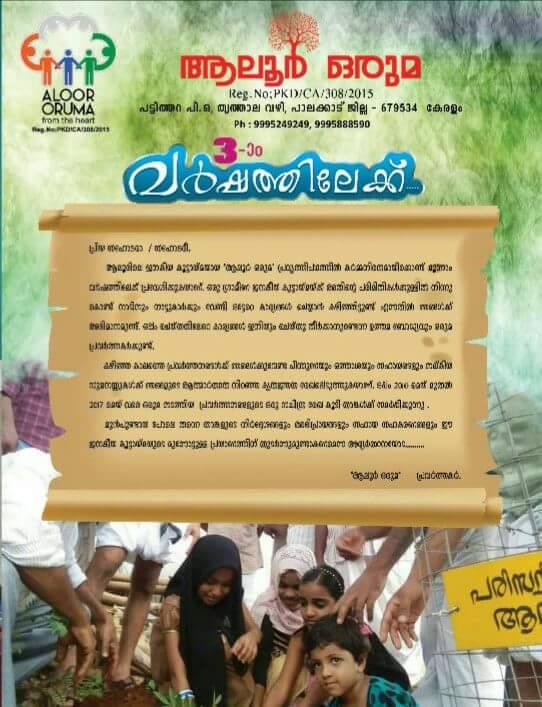
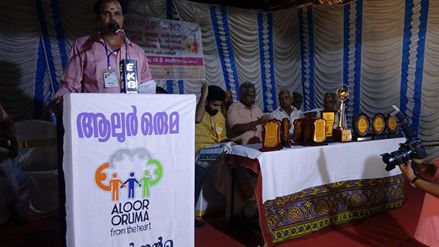
ALOOR ORUMA " 2ND Anniversery programe
" Exhibotion - Caricatures at GLP School, Aloor, Thrithala
Date 21-05-2017
Subscribe to:
Posts (Atom)